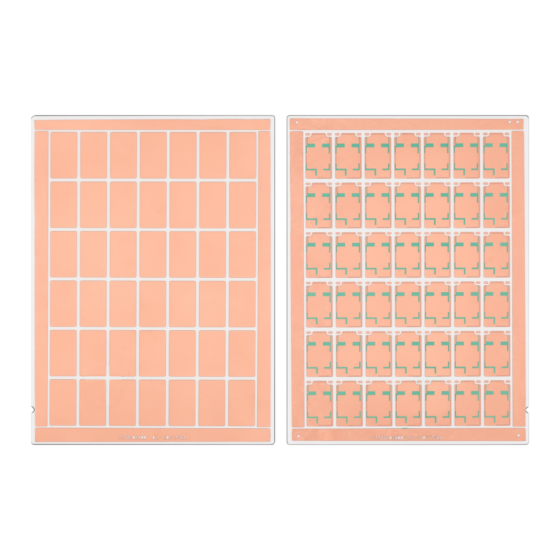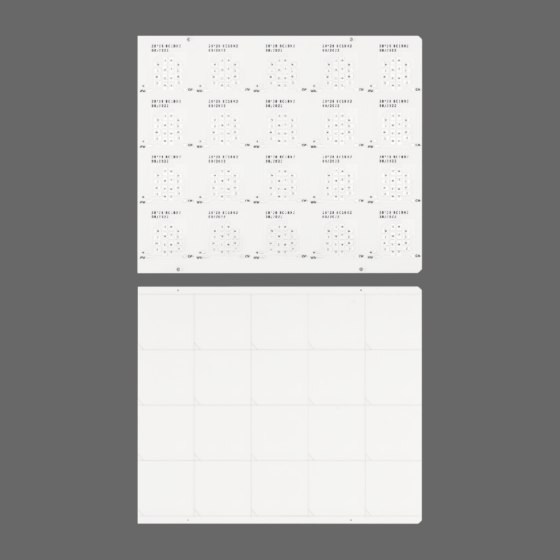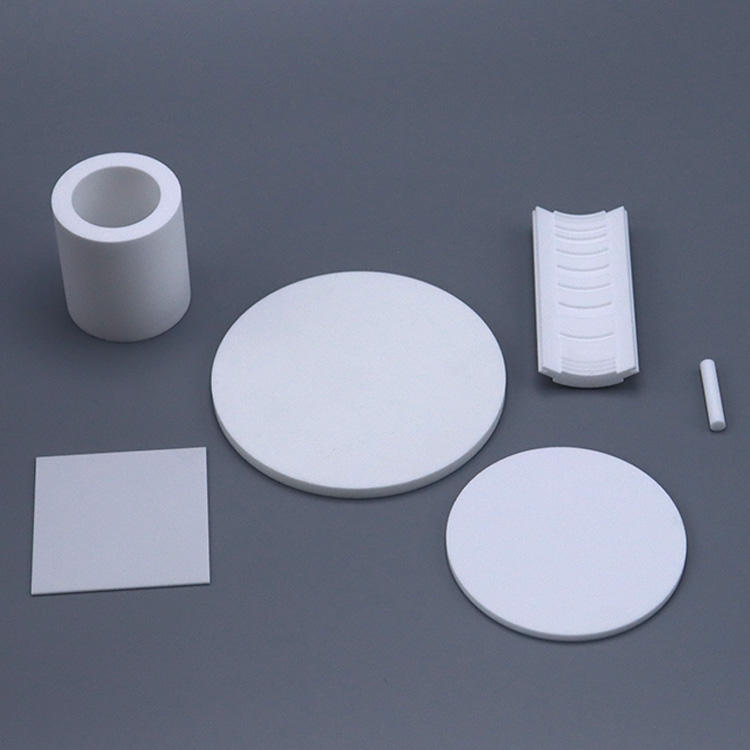
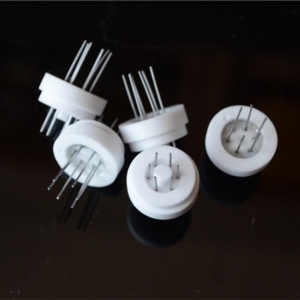
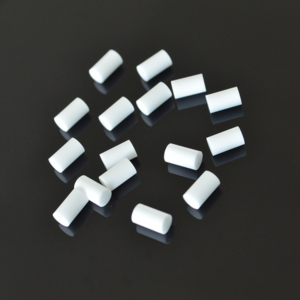
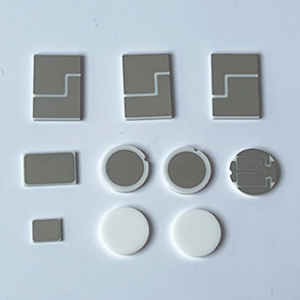
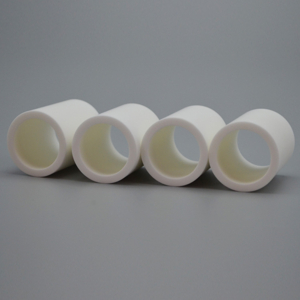
 High Performance Semiconductor Beryllium Beo Ceramic Disc Plate
High Performance BeO Ceramic Plate with Excellent Thermal Conductivity for Semiconductor & Electronic Devices
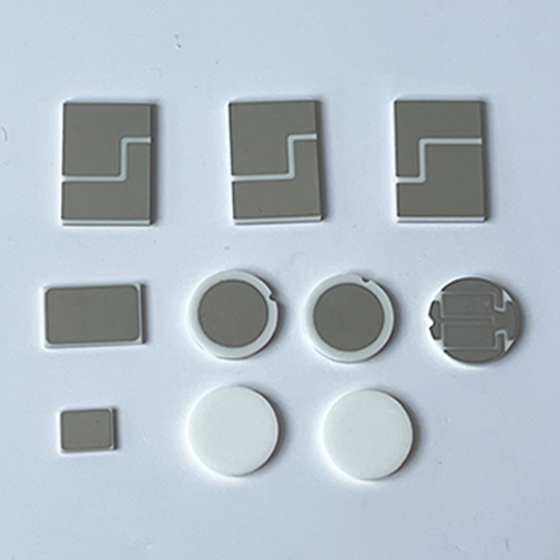 Beryllium Oxide Ceramic
Beryllium oxide (BeO) ceramic is a high-performance advanced material known for its exceptional thermal conductivity and stability at high temperatures. It has a melting point ranging from 2530°C to 2570°C and a theoretical density of 3.02 g/cm³.
BeO ceramics can operate continuously at:
1800°C in vacuum,
2000°C in inert gas,
and remain stable up to 1800°C in oxidizing environments without volatilization.
The most remarkable property of beryllium oxide is its extremely high thermal conductivity, which is comparable to that of metallic aluminum and 6 to 10 times higher than alumina (Al₂O₃).
In addition to its thermal advantages, BeO ceramic is an excellent dielectric material with a unique combination of electrical insulation, thermal conductivity, and mechanical strength. No other ceramic material offers such a well-balanced and comprehensive performance profile, making it ideal for demanding applications in electronics, aerospace, and high-temperature systems.
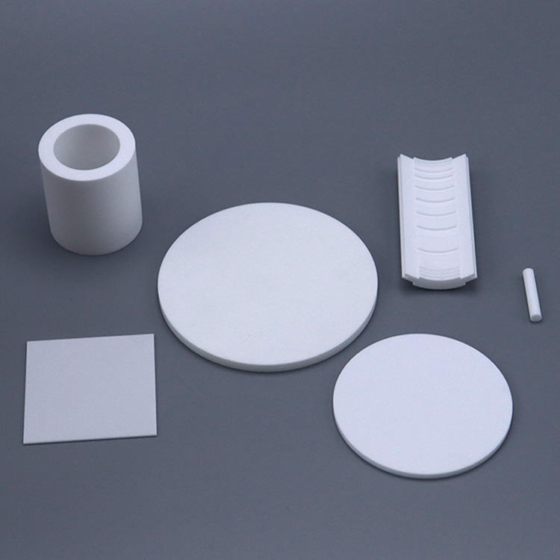
Attributes
| Attribute 1 | Value 1 | Attribute 2 | Value 2 |
| Material | Beryllium oxide ceramic | Place of Origin | Guangdong, China |
| Type | Ceramic Rods | Application | Refractory |
| Model Number | GIM-9785 | Brand Name | GIM |
| Color | White | Thermal Conductivity | >35W/m.k |
| Width | 20-500mm | Alumina Content | 75-99.7% Available |
| Feature | Eco-friendly | Thickness | 1-60mm |
| Brand | Xingtailong | Certification | ISO9001-2008/CE |
| Shape | Can be requested | Sample | Free available |
| Selling Units | Single item | Single package size | 35X25X35 cm |
| Single gross weight | 3.000 KG |
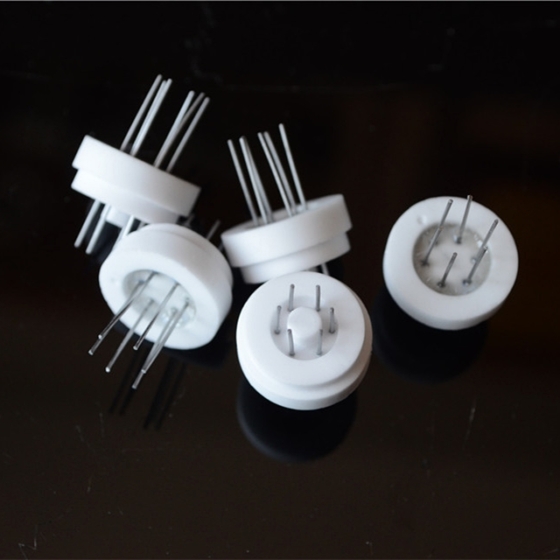
✅ Applications of Beryllium Oxide (BeO) Ceramic
Electronics & Semiconductors
Beryllium oxide is widely used in the production of high-power electronic devices—such as transistors, diodes, and integrated circuits—where superior heat dissipation is essential to maintain performance and reliability.Nuclear Industry
Thanks to its excellent thermal conductivity and high neutron transparency, BeO ceramic is employed as a moderator, insulator, and structural material in nuclear reactors and related systems.Aerospace & Defense
In harsh environments involving high temperatures, vibrations, and radiation, BeO provides a reliable solution for thermal management and electrical insulation in sensitive components and subsystems.Medical Equipment
BeO ceramics are utilized in advanced medical imaging systems (e.g., CT scanners, MRI units) and diagnostic devices where precise thermal control and electrical insulation are critical for safety and accuracy.
Laser Systems
Owing to its high thermal conductivity and low thermal expansion, beryllium oxide is used as a substrate or heat sink in high-power laser systems, ensuring stability and performance under thermal load.Thermal Management Solutions
BeO ceramics are ideal for applications requiring efficient heat transfer, including heat sinks, thermal spreaders, and heat exchangers, especially in compact or high-performance systems.
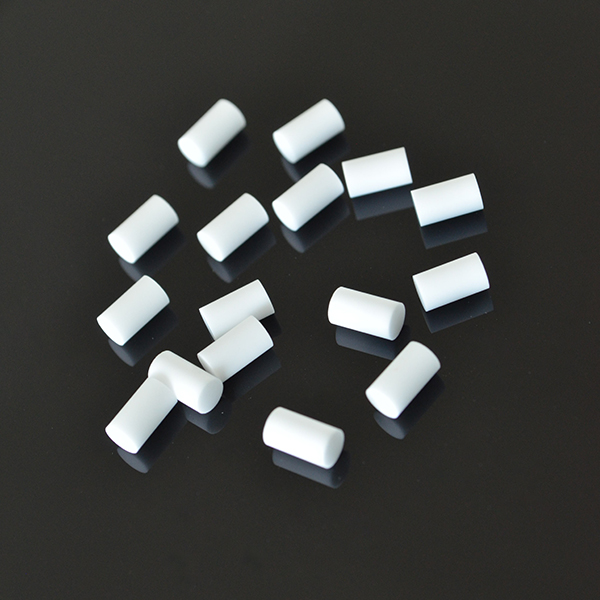
Properties of Beryllium Oxide (BeO) for Industrial Applications
| Properties of Beryllium Oxide (BeO) for Industrial Applications | ||
| Property Type | Property | Description |
| Physical | Density | 3.01 g/cc, lighter than alumina |
| Hardness & Strength | Comparable to silicon carbide and boron nitride | |
| Fracture Toughness | Lower than alumina, offset by high thermal conductivity | |
| Chemical | Stability | Resistant to most acids, bases, and molten metals |
| Reactivity | Reacts with water vapor above 1000 | |
| Thermal Shock | Excellent resistance to rapid temperature changes | |
| Thermal | Conductivity | Up to 330 W/mK, among the highest for ceramics |
| Electrical | Dielectric Strength | 10-16 kV/mm, ideal for high voltage applications
|
| Dielectric Constant | Low, beneficial for high-frequency electronic applications | |
Industry Resources & References
Explore trusted global resources and organizations related to advanced ceramics and precision material applications across various industries.
Advanced Materials
Learn more about the latest trends in advanced ceramics and precision materials from
AZoM,
a global materials science hub that provides insights into innovations, applications, and manufacturing technologies.
Aerospace Industry
The aerospace industry relies heavily on high-performance ceramics. Visit
NASA
to explore how ceramic materials are used in propulsion systems, thermal protection, and structural components in space exploration.
Electronics Industry
The electronics and semiconductor sectors depend on materials with high dielectric strength and insulation performance.
IEEE
is a trusted global organization that drives innovation in electrical and electronic engineering.
Semiconductor Industry
Discover how advanced ceramics contribute to semiconductor manufacturing — from wafer handling to plasma etching — at the
Semiconductor Industry Association (SIA).
Automotive Industry
The automotive industry increasingly adopts advanced ceramic components for fuel systems, sensors, and EV batteries.
Visit SAE International
for standards and innovations driving automotive engineering forward.
Medical & Healthcare
Advanced ceramics play a vital role in medical implants and devices due to their bio-compatibility and wear resistance.
The U.S. FDA Medical Devices Center
provides regulatory and research information in this field.
New Energy
In the renewable energy sector, ceramics are used for high-temperature fuel cells and power electronics.
Visit the U.S. Department of Energy (DOE)
for innovations and materials research in sustainable energy technologies.
Technical Resources for Ceramic Substrates, PCB Technology and Power Electronics
Explore international technical organizations, research institutions,
academic publications, and engineering resources related to ceramic
substrates, electronic packaging, power semiconductor reliability,
thermal management, and printed circuit board technologies.
International Technical Organizations
IEEE Electronics Packaging Society
— Research and technical knowledge covering electronic packaging,
materials, thermal design, and reliability.
Institute of Electrical and Electronics Engineers
— International engineering research and professional knowledge
covering electronics and electrical engineering.
IPC International
— Industry standards, technical publications, and resources for
printed circuit boards and electronics manufacturing.
International Electrotechnical Commission
— International electrotechnical standardization and technical
information for electrical and electronic technologies.
SEMI
— Industry information and initiatives related to semiconductor
manufacturing and advanced electronics.
American Society of Mechanical Engineers
— Engineering knowledge relevant to thermal systems, mechanical
design, materials, and reliability.
Government Research and Scientific Institutions
National Institute of Standards and Technology
— Materials characterization, measurement science, and engineering
research.
U.S. Department of Energy: Electric Drive Systems Research
— Research on power electronics, electric-drive systems, advanced
packaging, and thermal management.
Advanced Research Projects Agency-Energy
— Research programs and technical initiatives addressing advanced
energy technologies and power systems.
Office of Scientific and Technical Information
— Scientific and technical publications from U.S. Department of
Energy research programs.
NASA
— Aerospace engineering, electronic systems, and high-reliability
technology research.
NASA Electronic Parts and Packaging Program
— Electronic parts assurance, packaging reliability, and
qualification-related technical information.
National Laboratory of the Rockies
— National laboratory research in energy systems and related
advanced engineering technologies.
National Renewable Energy Laboratory
— Research on renewable energy systems, power conversion, and
energy technology development.
Advanced Ceramics and Electronic Packaging Research
Fraunhofer Institute for Ceramic Technologies and Systems
— Research in technical ceramics, ceramic processing, and
ceramic-based electronic systems.
Fraunhofer IKTS: Rethink Power Electronics Research
— Research on functionalized ceramic DCB substrates and monitoring
technologies for power electronic modules.
Fraunhofer Institute for Reliability and Microintegration
— Electronic packaging, system integration, interconnection
technologies, and reliability research.
Fraunhofer Institute for Integrated Systems and Device Technology
— Semiconductor materials, power electronics, and device technology
research.
NC State Department of Materials Science and Engineering
— Academic research and education in materials science, ceramics,
and engineering materials.
American Ceramic Society
— Scientific and technical knowledge related to ceramic materials,
processing, properties, and applications.
Academic Literature and Research Databases
IEEE Xplore Digital Library
— Engineering papers on power electronics, electronic packaging,
semiconductor devices, and reliability.
PubMed
— Biomedical and life-science literature, useful for specialized
materials research in medical electronics.
PubMed Central
— Full-text scientific articles, including open-access materials
and engineering research.
ScienceDirect
— Scientific publications covering ceramics, material interfaces,
thermal management, and power electronics.
SpringerLink
— Academic literature in materials science, applied physics,
electronics, and engineering.
Google Scholar
— Scholarly search for research on DBC, DPC, AMB, ceramic
substrates, and electronic packaging.
Materials
— Peer-reviewed research on materials science, ceramics,
interfaces, and material characterization.
Nature Portfolio
— Scientific research and reviews across materials science,
engineering, and related technology fields.
Direct Bonded Copper and Power Electronics Research
Characterization of Materials and Their Interfaces in a Direct Bonded Copper Substrate
— Research on copper, ceramic, and interface behavior in DBC
substrates for power electronics applications.
DBC Technology for Low Cost Power Electronic Substrate Manufacturing
— Research on DBC processing and ceramic-based power substrate
manufacturing.
Machine Learning Algorithms for Design Optimization of Ceramic DBC Substrates
— Research into DBC substrate design optimization, stress analysis,
and reliability.
Enhancing Thermal Reliability of Ceramic Substrates Using Lotus-Type Porous Copper
— Research on thermal reliability and structural design of
alumina-based DBC substrates.
Emerging Advanced Electronic Packaging Materials for Thermal Management in Power Electronics
— A review of advanced ceramic substrates, thermal interface
materials, and thermal management challenges in power electronics.
Embedded PCB and DBC-Integrated Design of GaN Power Modules
— Research on integrated PCB and DBC designs for improved
electrical and thermal performance.
About NMMech
NMMech focuses on the research, development, and manufacturing of
precision ceramic substrates, including Direct Bonded Copper (DBC)
and Direct Plated Copper (DPC) technologies. Our technical interests
include ceramic material selection, copper-to-ceramic interfaces,
circuit pattern design, thermal management, and electronic packaging.
We support customized substrate development based on project
specifications and application requirements.