 ยิม
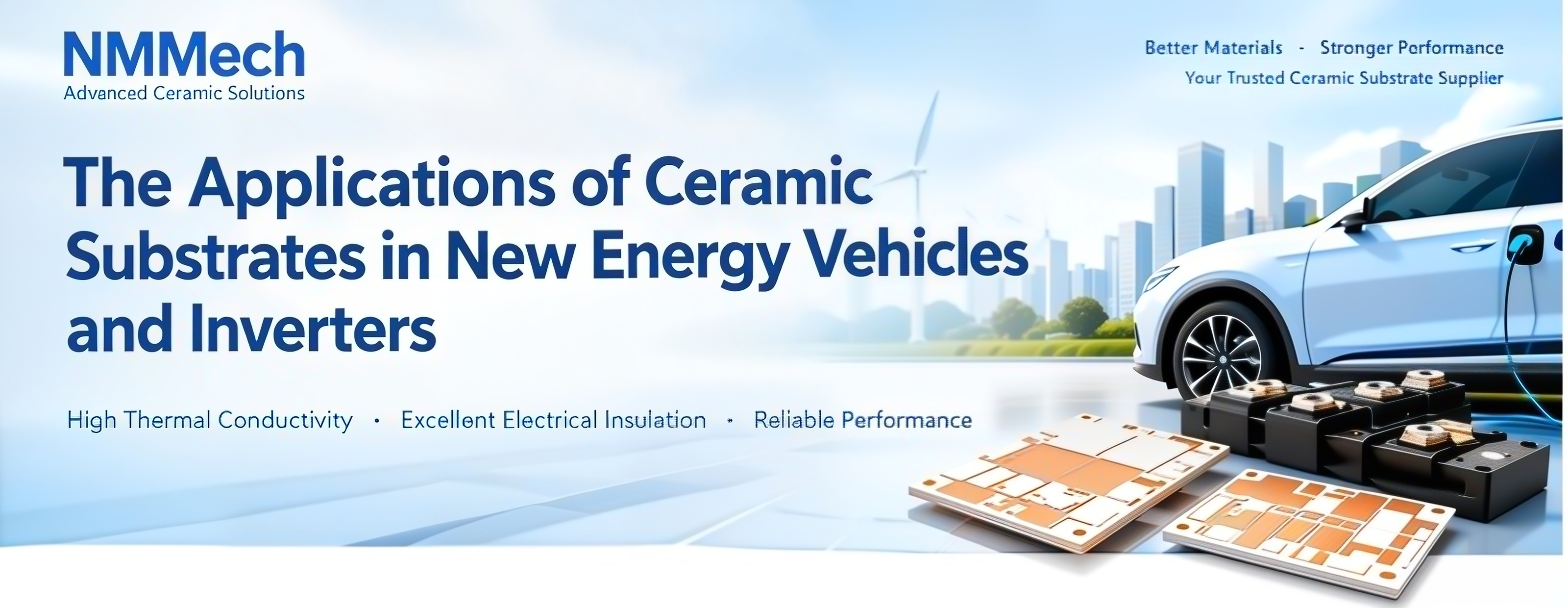
Applications of Ceramic Substrates in New Energy Vehicles and Inverters
How DBC, DPC and AMB ceramic substrate technologies support thermal management, electrical insulation and reliable power conversion.
Introduction: Power Electronics Is Driving Electrification
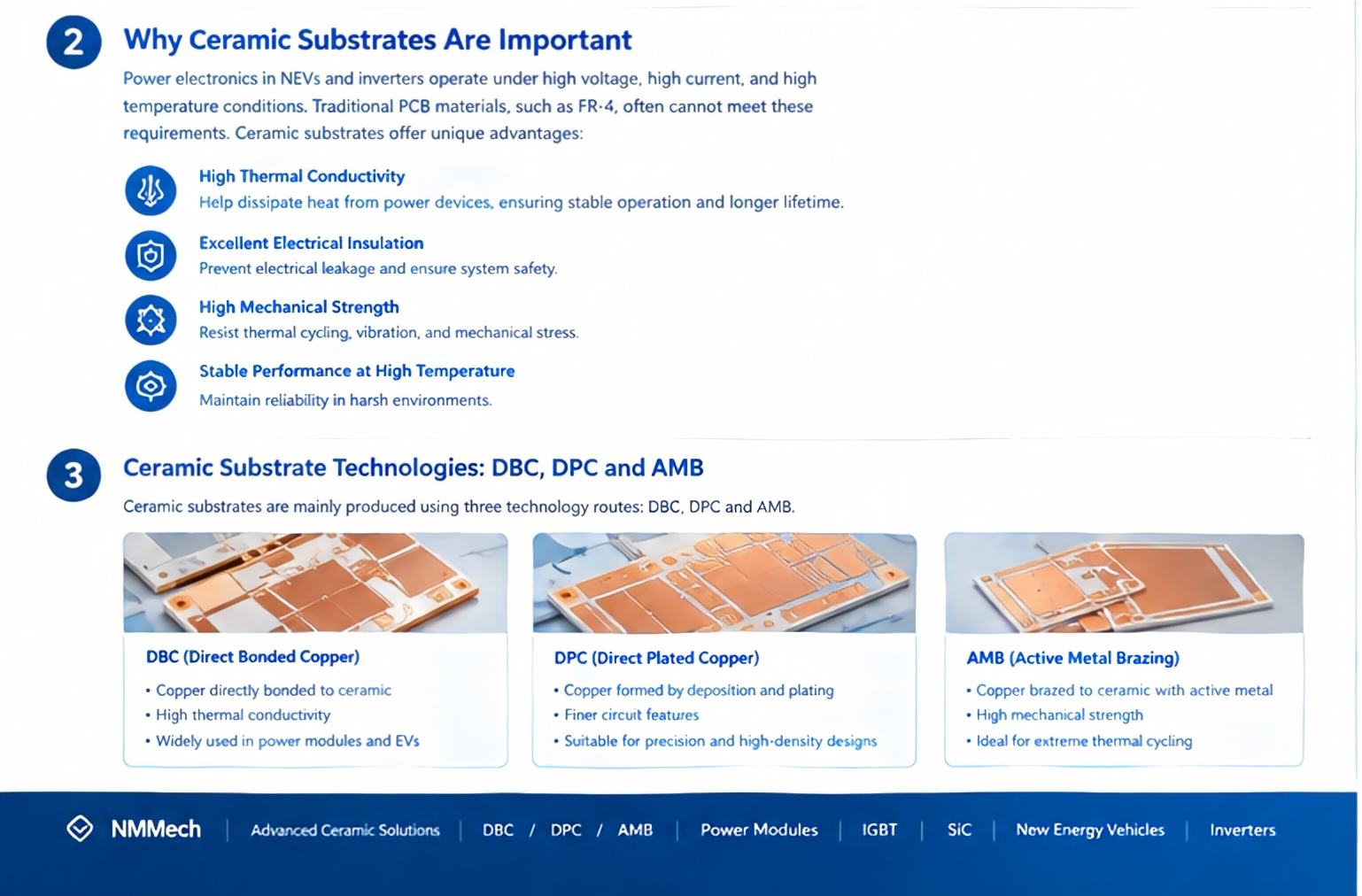
The transition to electrification is changing the automotive, energy and industrial sectors. New energy vehicles (NEVs), solar inverters, wind-power converters and battery energy-storage systems all depend on power electronics to convert and control electrical energy. As these systems become more compact and powerful, their semiconductor devices must operate efficiently while handling high current, rapid switching, changing temperatures and demanding service conditions. Thermal management, electrical insulation and long-term reliability are therefore central to power-module design.
A semiconductor chip is only one part of a complete power module. The substrate beneath it helps support the circuit, isolate conductive areas and transfer heat toward the module’s cooling structure. Ceramic substrates are widely considered for these tasks because they combine electrical insulation with useful thermal and mechanical properties. Technologies such as DBC (Direct Bonded Copper), DPC (Direct Plated Copper) and AMB (Active Metal Brazing) join or form copper conductors on ceramic materials to create a foundation for power-electronic circuits.
This article explores how ceramic substrates are used in new energy vehicles and inverters, the roles they play in power modules, the differences between DBC, DPC and AMB, and the key factors to consider when specifying a substrate. The best solution depends on the device, voltage, current, heat load, mechanical environment, manufacturing capability and total project requirements—not simply on the technology name.


1. Why Ceramic Substrates Matter in Power Modules
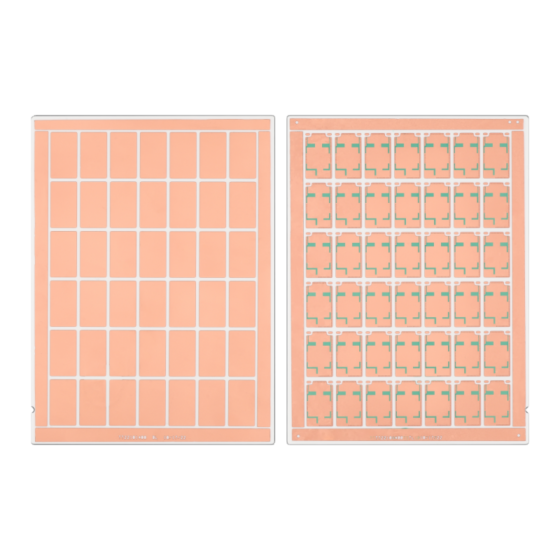
Ceramic substrates are functional parts of a power module, not just flat supports for circuit patterns. A typical design places semiconductor dies on patterned copper areas. The ceramic layer electrically separates conductive regions and, depending on the construction, separates the circuit from a metal baseplate or cooling assembly. At the same time, heat generated by the semiconductor must pass through the die-attach layer, copper, ceramic and other interfaces before reaching the cooler.
**Thermal management.** Power semiconductor devices generate heat during conduction and switching. The substrate contributes to the thermal path from the chip to the cooling system. Appropriate ceramic material, thickness and copper geometry can help control thermal resistance and temperature gradients. However, substrate selection alone cannot guarantee low operating temperature: die attachment, interface materials, baseplate design, cooling conditions and assembly quality also affect the final result.
**Electrical insulation.** The ceramic layer provides isolation between copper features and, in many designs, between the circuit and the metal mounting side. Required insulation depends on working voltage, transient overvoltage, circuit geometry, creepage and clearance distances, contamination conditions and applicable standards. These requirements should be checked for the finished module rather than inferred from a material name alone.
**Mechanical and thermal-cycle reliability.** Power modules experience repeated heating and cooling, vibration, shock and power cycling. Copper and ceramic have different coefficients of thermal expansion, so the substrate structure and joining interface must be suitable for the resulting stresses. Material properties, interface quality, module layout and assembly processes should be considered together.
**Electrical circuit integration.** Patterned copper connects semiconductor dies, terminals and other components. Copper thickness and circuit geometry influence current capacity, electrical resistance, heat spreading and manufacturing tolerances. The right configuration depends on the module’s current, power density, packaging limits and switching behavior.
 2. DBC, DPC and AMB: Three Important Technologies
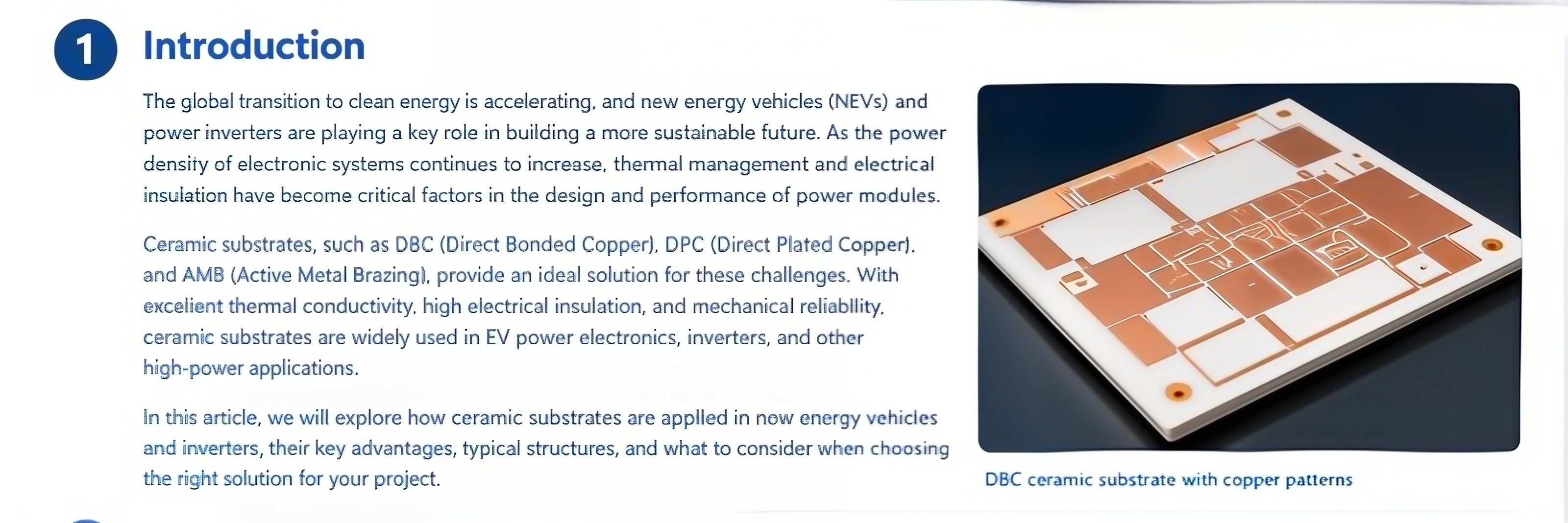 2.
**DBC — Direct Bonded Copper.** DBC uses a controlled high-temperature process to bond copper directly to a ceramic surface. Alumina (Al₂O₃) and aluminum nitride (AlN) are common ceramic options. DBC is frequently considered for power modules requiring relatively thick copper patterns and robust current-carrying paths. Depending on the design, it can be used in IGBT modules, SiC power modules, traction inverters and industrial power-conversion equipment.
**DPC — Direct Plated Copper.** DPC generally forms copper features on a ceramic surface through metallization, plating and related thin-film or semi-additive processes. It can support precise circuit definition and fine line-and-space features, making it useful for compact or detailed ceramic circuits. When DPC is considered for a high-current path, the engineer should confirm available copper thickness, conductor geometry, current capacity and thermal performance for the specific design.
**AMB — Active Metal Brazing.** AMB joins copper to ceramic using an active-metal brazing alloy. Silicon nitride (Si₃N₄) is often considered for demanding power-module applications because it combines useful thermal properties with high mechanical strength and fracture toughness. AMB may be evaluated for designs exposed to challenging thermal cycling, vibration or mechanical stress, subject to the supplier’s process capability and the module’s qualification requirements.
These technologies are not universal substitutes for one another. DBC can be attractive for direct copper bonding and robust conductor patterns; DPC can be useful when precise, fine-featured circuits are important; and AMB may be considered where mechanical robustness and thermal-cycle performance are key priorities. Actual capabilities vary by supplier and construction. A fair comparison should include ceramic type, copper thickness, circuit design, thermal performance, reliability targets, manufacturability, cost and lead time.
 3. Applications in New Energy Vehicles
 3.
New energy vehicles use several power-electronic systems to manage energy between the traction battery, electric motor, charging equipment and auxiliary electrical loads. Ceramic substrates may be used in power modules for traction inverters, onboard chargers, DC-DC converters and other high-power assemblies. Their exact role depends on vehicle architecture, semiconductor choice and module packaging.
**Traction inverters.** The traction inverter converts battery DC power into controlled AC power for the electric motor. Semiconductor modules must switch current efficiently while managing heat and maintaining electrical isolation. A ceramic substrate carries patterned copper circuits and helps transfer heat from the semiconductor devices toward the module’s cooling structure. The substrate material, copper thickness, circuit pattern and insulation design must be matched to the voltage class, current profile, cooling arrangement and expected operating cycle.
**Onboard chargers.** An onboard charger converts power from an external charging source into a form suitable for the vehicle battery. Its power-conversion stages may use high-frequency switching devices. Ceramic substrates can support semiconductor packaging where heat transfer, insulation and compact construction are important. The suitable substrate depends on the charger’s topology, power rating, switching frequency and thermal design.
**DC-DC converters.** These converters transform high-voltage battery power into lower-voltage power for vehicle electronics and auxiliary systems. Requirements depend on the converter architecture, current, switching profile, packaging constraints and cooling strategy. Substrate design must balance electrical isolation, thermal behavior and circuit layout.
**Automotive reliability.** Vehicle components can experience temperature swings, vibration, shock, humidity, contamination and long service-life expectations. Substrate evaluation may include power cycling, thermal cycling, insulation performance, copper adhesion, dimensional stability and compatibility with the complete module assembly. Material datasheets provide useful starting information, but they do not replace module-level testing and validation.
4. Applications in Inverters and Energy Conversion
Inverters and power converters are essential in renewable energy, energy storage, industrial automation and commercial power systems. Ceramic substrates may be used in the semiconductor modules at the heart of these systems, particularly where heat transfer, electrical isolation and reliable operation are important.
**Solar inverters.** Photovoltaic systems convert solar energy into electrical power, while inverters manage conversion and interaction with the grid. Power modules operate under changing loads and environmental conditions. Ceramic substrates can provide an insulated circuit structure and a thermal path, while the full design must also account for ambient temperature, enclosure conditions, cooling and expected service life.
**Wind-power converters.** Wind turbines use converters to manage variable generator output and deliver controlled electrical power. Long operating periods, temperature variation and vibration make reliability an important consideration. Substrate selection should be coordinated with electrical loading, cooling design, mechanical conditions and maintenance expectations.
**Battery energy storage.** Energy-storage systems use power-conversion equipment to charge and discharge batteries and interface with the grid. Ceramic substrates can support power modules where insulation and heat dissipation are required. System-level safety, fault handling and thermal design remain essential and should be assessed independently of the substrate alone.
**Industrial and commercial inverters.** Motor drives, uninterruptible power supplies, welding equipment and industrial converters have different voltage, current and duty-cycle requirements. A substrate should be selected based on measurable operating conditions and reliability targets, not simply because it is marketed for a particular industry.
5. How to Select the Right Ceramic Substrate
A reliable selection process begins with application requirements and acceptance criteria. Engineers and purchasing teams should prepare as much of the following information as possible:
• **Application and device:** traction inverter, onboard charger, DC-DC converter, solar inverter, wind converter, energy-storage converter, motor drive, IGBT module or SiC MOSFET module.
• **Ceramic material:** alumina (Al₂O₃), aluminum nitride (AlN), silicon nitride (Si₃N₄), or a request for the supplier to recommend a suitable option.
• **Dimensions and thickness:** substrate length and width, ceramic thickness, tolerances, flatness and packaging restrictions.
• **Copper construction:** copper thickness on each side, circuit layout, minimum line width and spacing, isolated areas and surface-finish requirements.
• **Electrical conditions:** working voltage, transient voltage, current, isolation requirements and applicable standards or test methods.
• **Thermal conditions:** heat load, target thermal resistance, operating temperature, cooling arrangement and expected power-cycling profile.
• **Mechanical and reliability conditions:** vibration, shock, thermal cycling, power cycling, environmental exposure and target service life.
• **Commercial needs:** prototype quantity, annual demand, target cost, delivery schedule, packaging, traceability and quality documentation.
A drawing, Gerber file, layer stack-up or existing sample can make the technical review more efficient. If the project is still in development, provide the module architecture and expected operating conditions. This helps the supplier identify feasibility questions early and discuss material and process options before the design is finalized.
6. Design, Testing and Reliability Considerations
Substrate selection should be integrated into the design of the complete power module. Copper thickness and circuit geometry affect resistance and current distribution; ceramic type and thickness affect insulation and heat transfer; and the joining interface contributes to mechanical behavior and thermal-cycle reliability. These factors interact, so optimizing one parameter in isolation may create trade-offs elsewhere.
Thermal resistance should be evaluated across the complete stack, including the semiconductor die, die-attach layer, copper, ceramic, baseplate, thermal interface material and cooling system. Electrical insulation should be verified at the assembly level, considering transient voltage, creepage and clearance distances, environmental contamination and relevant safety requirements. Depending on the application, qualification may include thermal cycling, power cycling, insulation tests, adhesion evaluation, dimensional inspection and other customer-specific checks.
For SiC power modules, fast switching and high power density can make parasitic inductance, circuit layout, electromagnetic compatibility and thermal gradients especially important. IGBT modules have different switching and thermal characteristics, but they also require a stable electrical and thermal path. The appropriate substrate is the one that meets verified system requirements and can be manufactured consistently at the required quality and volume.
7. Conclusion: A Reliable Foundation for Electrification
Ceramic substrates are important enabling components in new energy vehicles, inverters and modern power-conversion systems. By combining an insulating ceramic layer with patterned copper, they help power modules manage electrical isolation, heat transfer and circuit integration. DBC, DPC and AMB provide different manufacturing routes and design possibilities, and each should be evaluated against the project’s electrical, thermal, mechanical and commercial needs.
The best approach is to define operating conditions and measurable acceptance criteria first, then compare ceramic materials, copper configurations, manufacturing capabilities and qualification results. For purchasing teams, providing complete drawings, quantities, target performance and delivery expectations helps suppliers prepare a relevant proposal.
NMMech welcomes technical discussions about ceramic substrate solutions for power electronics. To evaluate a project, share the application, substrate dimensions, ceramic material preference, copper thickness, circuit files, operating conditions and estimated order quantity. A clear specification is the first step toward a suitable and reliable substrate solution.
Looking for a Ceramic Substrate Solution?
Contact NMMech to discuss your application, substrate dimensions, ceramic material, copper thickness, circuit design, operating conditions and estimated quantity. Replace this text with your verified contact email or inquiry-page link before publishing.
ceramic substrate for electric vehicles, ceramic substrate for inverter, พื้นผิวเซรามิก DBC, DPC ceramic substrate, AMB ceramic substrate, IGBT power module, SiC power module, EV inverter, solar inverter, power electronics thermal management.
DBC, DPC, AMB Ceramic Substrates and PCB Industry Resources
Explore industry standards, technical publications, semiconductor manufacturers,
and advanced materials resources related to DBC, DPC, and AMB ceramic substrates,
power electronics, electronic packaging, and PCB manufacturing.
These resources provide useful technical references for engineers, researchers,
procurement professionals, and manufacturers working in power semiconductor
packaging, thermal management, LED technology, and advanced electronic materials.
1. Industry Standards and Associations
1. IPC – Electronics Manufacturing Standards
IPC provides industry standards and technical resources for printed circuit boards,
electronic assemblies, manufacturing processes, quality management, and reliability.
Website:
https://www.ipc.org/
2. JEDEC – Semiconductor Standards
JEDEC develops semiconductor industry standards and technical resources covering
electronic devices, packaging, testing, performance, and reliability.
Website:
https://www.jedec.org/
3. IEC – International Electrotechnical Commission
IEC develops international standards for electrical and electronic technologies,
including areas relevant to electrical insulation, power electronics, and
industrial electronic equipment.
Website:
https://www.iec.ch/
4. IEEE Xplore – Engineering Research
IEEE Xplore provides access to scientific and engineering publications on
semiconductor devices, power electronics, thermal management, and electronic packaging.
Website:
https://ieeexplore.ieee.org/
5. SEMI – Semiconductor Industry Association
SEMI provides industry resources related to semiconductor manufacturing,
materials, equipment, and the global electronics supply chain.
Website:
https://www.semi.org/
2. Ceramic Substrates and Advanced Materials
6. Rogers Corporation – curamik Ceramic Substrates
Rogers provides advanced electronic materials and ceramic substrate solutions
for power electronics, including technologies relevant to DBC and AMB substrates.
Website:
Rogers Ceramic Substrates
7. CoorsTek – Technical Ceramics
CoorsTek develops technical ceramic materials for electronics, semiconductor
manufacturing, industrial equipment, and demanding thermal and electrical applications.
Website:
CoorsTek Products and Applications
8. Ferrotec – Power Electronic Substrates
Ferrotec provides technical and product information related to power electronic
substrates and advanced materials used in electronic systems.
Website:
Ferrotec Power Electronic Substrates
9. ScienceDirect – Scientific Research
ScienceDirect provides access to scientific publications covering ceramic materials,
substrate bonding, thermal conductivity, material properties, and electronic packaging.
Website:
ScienceDirect
10. WellPCB – Ceramic Substrates
WellPCB provides industry information related to ceramic circuit substrates,
ceramic PCB manufacturing, and electronic circuit applications.
Website:
WellPCB Ceramic Substrates