GIM
GIM
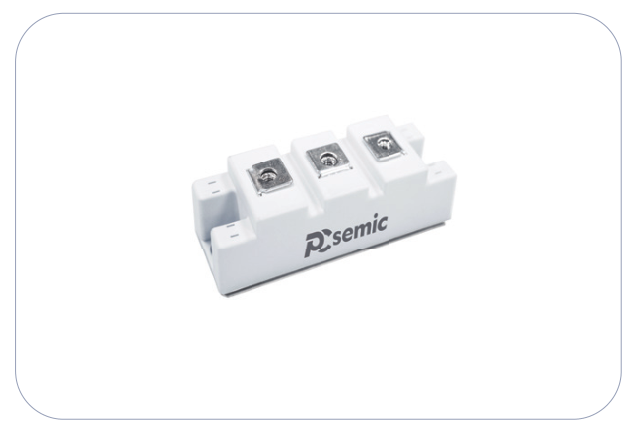
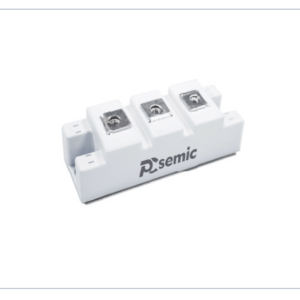
 FRD/SBD Modules – High-Efficiency Rectification, Stable and Reliable
High Voltage Tolerance · Low Leakage Current · Low Resistance · High Current Capacity
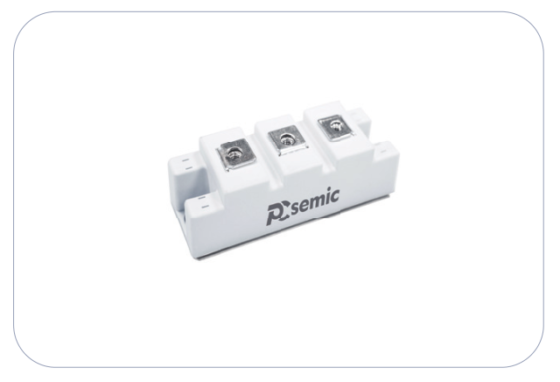 FRD (Fast Recovery Diode) and SBD (Schottky Barrier Diode) modules offer high voltage tolerance, low leakage current, low forward resistance, and high current capability, making them essential for switching power supplies, PWM pulse width modulators, and inverters. These modules serve as high-frequency rectifier diodes, freewheeling diodes, or damping diodes, playing a critical role in power conversion and energy management.
FRDs (Fast Recovery Diode) are semiconductor diode with good switching characteristics and short reverse recovery time.They mainly used in switching power supplies, PWM pulse width modulators, inverters and other electronic circuits, as a high-frequency rectifier diodes, current diodes, or damping diodes.
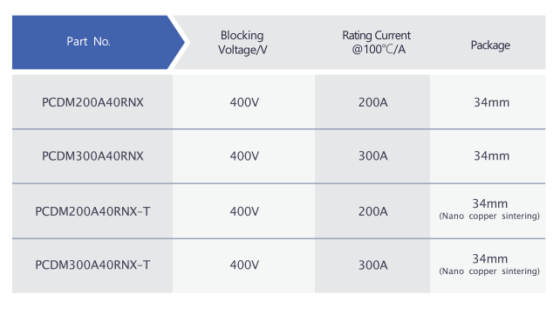
Key Advantages
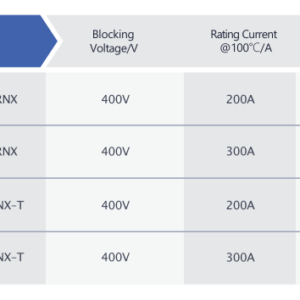
✅ High voltage tolerance (400V-650V) – Ensures stability and safety in demanding environments
✅ Low leakage current – Enhances energy efficiency and reduces power loss
✅ Low forward voltage drop & low conduction loss – Optimizes power efficiency
✅ High-frequency operation – Ideal for efficient power conversion and control applications
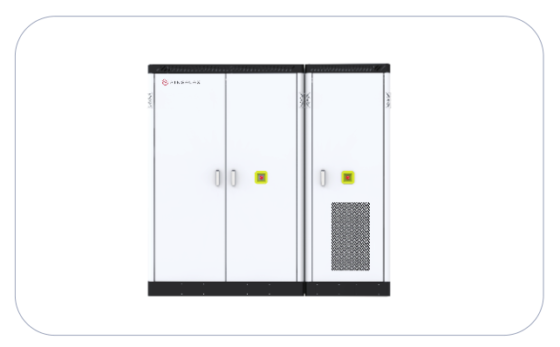
Applications
🚀 Switching Power Supplies (SMPS) – Boosts efficiency and minimizes heat dissipation
⚡ Inverters – Used as freewheeling diodes to improve power factor
🔋 PWM Controllers – Enables precise energy management in high-frequency circuits
Semiconductor offers a 400V-650V series of FRD/SBD modules, empowering electronic systems with superior efficiency, reliability, and energy-saving performance!
✅Contact us:
website: www.nmmech.com
Correo electrónico: jack@nmmech.com
More industry information:
🌐 1. Advanced Materials / Precision Ceramics
External Link: https://www.azom.com
Description :
Learn more about the latest trends in advanced ceramics and precision materials from AZoM, a global materials science hub that provides insights into material innovations, applications, and manufacturing technologies.
🚀 2. Aerospace Industry
External Link: https://www.nasa.gov
Description:
The aerospace industry relies heavily on high-performance ceramics. Visit NASA to explore how ceramic materials are used in propulsion systems, thermal protection, and structural components in space exploration.
⚙️ 3. Electronics Industry
External Link: https://www.ieee.org
Description:
The electronics and semiconductor sectors depend on materials with high dielectric strength and insulation performance. IEEE is a trusted global organization that drives innovation in electrical and electronic engineering.
💡 4. Semiconductor Industry
External Link: https://www.semiconductors.org
Description:
Discover how advanced ceramics contribute to semiconductor manufacturing — from wafer handling to plasma etching — at the Semiconductor Industry Association (SIA).
🚗 5. Automotive Industry
External Link: https://www.sae.org
Description:
The automotive industry increasingly adopts advanced ceramic components for fuel systems, sensors, and EV batteries. Visit SAE International for standards and innovations driving automotive engineering forward.
🏥 6. Medical & Healthcare
External Link: https://www.fda.gov/medical-devices
Description:
Advanced ceramics play a vital role in medical implants and devices due to their bio-compatibility and wear resistance. The U.S. FDA Medical Devices Center provides regulatory and research information in this field.
⚡ 7. New Energy / Renewable Energy
External Link: https://www.energy.gov
Description:
In the renewable energy sector, ceramics are used for high-temperature fuel cells and power electronics. Visit the U.S. Department of Energy (DOE) for innovations and materials research in sustainable energy technologies.